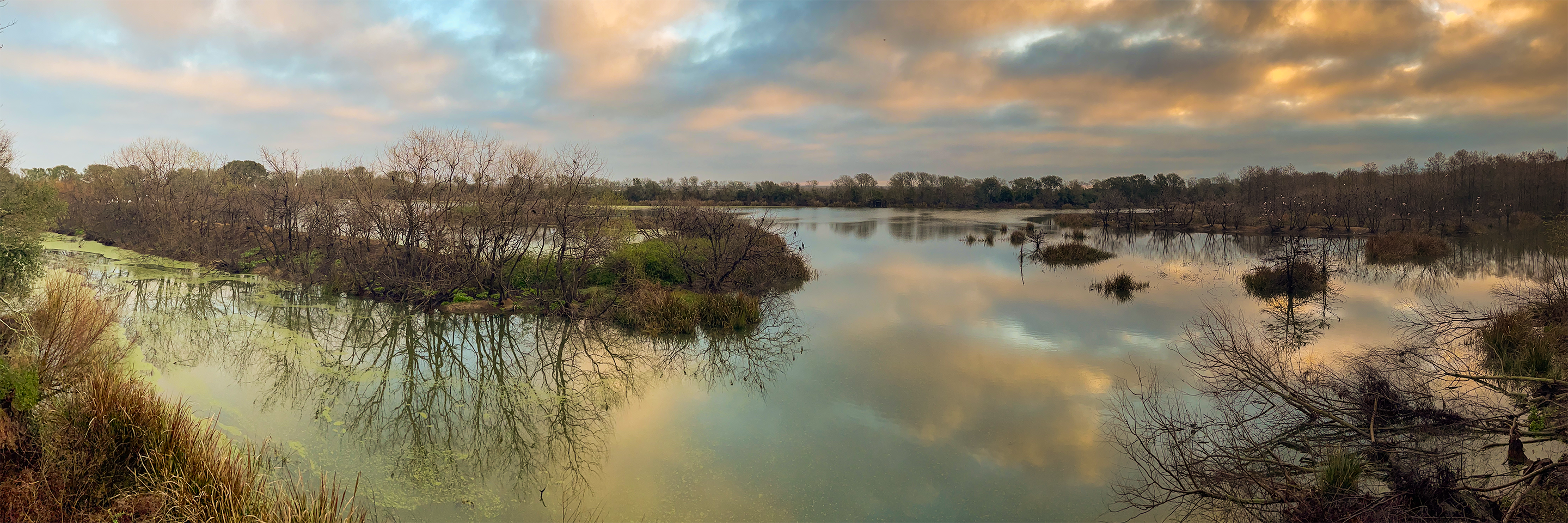
One of the joys of getting into bird photography has been discovering new places. So many of them are right in my backyard.
Places that I would never have gone to if it was not for seeing the birds. There are wetlands, coastal waterways, oxbow lakes, prairie pastures and marshes,
full of color, chirps and the beauty of flight. eBird has been a great source to find these bird hotspots.
When I heard about High Island and the vast number of migrating birds it attracts, I had to visit it. High Island is on the Gulf Coast of Texas in the Bolivar peninsula.
It is called High Island because it is just a few feet higher than the rest of the land near to the ocean because of the geological formation of a salt dome on top a
hydrocarbon reservoir that pushed the crust upwards. Migrating birds from the Yucatan peninsula in Mexico, when they get tired of flying across the Gulf find respite on
this elevation and descend on it in thousands. Though the greatest number of birds come during the sprint migration, the story of how the
Smith Oaks Bird Sanctuary came into being was simply too fascinating to wait till spring. The Sanctuary was an Oil and Gas facility which was later donated to the Houston Audubon Society after the operations wound down and the place was restored back to its natural state.
This was also the first time I was able to fully utilize the new tripod gimbal head to take pictures of the thousands of Cormorants, Spoonbills and Egrets in the rookery.
A well-balanced gimbal head is indeed a game changer for bird photography. Usually for bird photography one would be using high shutter speed and the tripod does not add
a lot to image sharpness, the key advantage is the ability to use the heavy gear for a long time without killing your arms. Though I did not try it this time, I could
have experimented with slower shutter speeds for blurred wings of a flying egret. I also experimented with full manual setup with high shutter speed (1/3200) and lower
ISO (1600, 3200). The result were these dark and moody photos. In post, I played around a lot with shaping the light and they look amazing especially when highlighting
the brilliant orange pinks of the spoonbills and even the striking gold from the wings of a soaring vulture.
This page also uses some new Java Script tricks for the lightbox implementation. When you click on a photo from the grid display it opens in the lightbox as a carousel.
Now there is an added feature to zoom in by clicking on any portion into the picture. Once zoomed in, simply move your cursor to look at other parts of the picture.
Clicking again zooms out to the original size. I had to build this feature specially
to showcase birds in their natural habitat, which is a direction I want to take my photos to. Most bird photographs showcase the bird in its zoomed in detail.
I find the birds in their natural habitat very interesting. How they interact with the ecosystem, their existence in the broader canvas and sometimes the sheer numbers
of them at a given place tell a story that I want to tell. This image gallery is designed to focus on the photographs. If you want to learn more about these birds, you can
click on these eBird links: